Heritage Trip Preparation
FCV Resources
Vietnam Articles
- Orphanage visits
- Social customs in Vietnam
- Weather & Trip Plans
- Ho Chi Minh City & Saigon
- Long An Province
- Tet Trung Thu
- Vietnam Travel Tips
- Travel Tips
- Temperature Guide
- Customs and Social Etiquette
- Vietnam - Mom & Daughter Spend a Year in Vietnam
- Planning A Return Trip to Vietnam
- Mid Autumn Festival is a Multicultural Holiday
Vietnam
News & Updates
Lotus - A trusted name in family travel
Guilin Photo Gallery
VIETNAM TRAVEL TIPS
Congratulations on your plans to travel to Vietnam. The travel professionals at Lotus Travel have compiled these tips in order to assist you in your travel planning.Travel Documents
Currency
Vietnam currency is the dong. The rate of exchange is approximately 19,000 dong to the dollar currently. US dollars bills preferably new & clean, are accepted almost everywhere. Use the currency converter to help you quickly calculate your exchange amount. We recommend exchanging only a small amount at a time since Vietnamese bank notes are issued only in small denominations. VISA, MasterCard and American Express cards are accepted in major hotels, restaurants and shops in the urban areas. While traveler’s checks are also accepted, exchanging them for dong can be quite inconvenient. ATM machines are available in most major cities and are convenient.
Climate
Vietnam has a tropical monsoon climate with wet and dry seasons. The country straddles different climatic zones; tropical in the north, subtropical in the south. Because of climactic fluctuations, there’s no best time to visit the country as a whole, although November-April is the dry season in the north, Central Highlands and South. Among the best times to visit some major cities: Hanoi: October–January; Hue, Danang and Hoian: February–April; Saigon, NhaTrang, Dalat, and Mekong Delta: December–March.
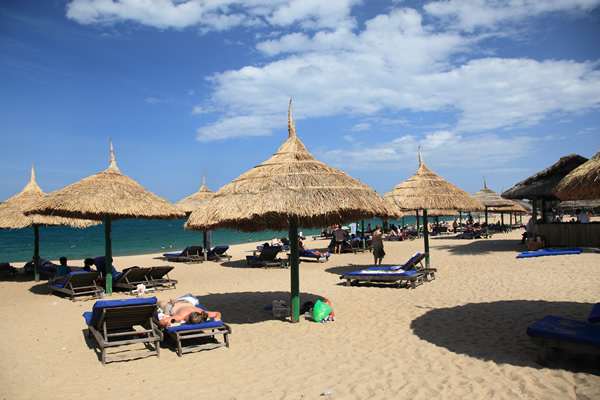
Northern Vietnam, including Hanoi, experiences two seasons, summer and winter. During the hot summer, from May to October, highs climb into the 90s F, and typhoons occasionally bring stormy weather. Winter, which runs between November and April, is mild and rainy with the lowest temperatures dipping into the 50s F.
Southern Vietnam, including Ho Chi Minh City (Saigon), has a tropical climate with two main seasons, wet and dry. During the wet season there are brief but heavy afternoon showers nearly every day. This season runs from May to November, with June to August being the wettest. The dry season extends from December to April. The hottest weather, accompanied by very high humidity, typically occurs between March and May.
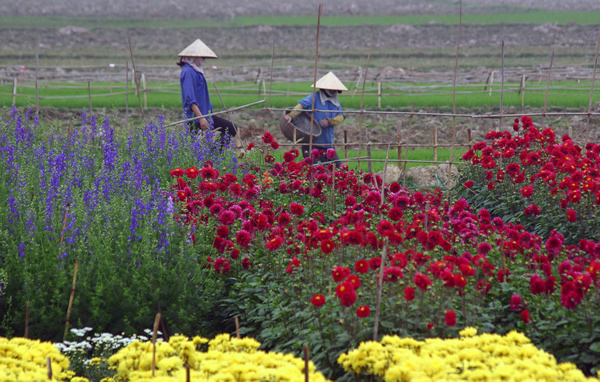
Some areas in the north, such as Haiphong and Hanoi will experience all four seasons as we do in North America. Refer to our temperature guide for specific temperatures.
Health
No vaccinations are officially required to visit. However, the Center for Disease Control (CDC) recommends that visitors have up–to–date inoculations for polio, meningitis, hepatitis A&B, tuberculosis, TABT (typhoid, paratyphoid A&B and tetanus), cholera, malaria, and Japanese encephalitis. In addition, we suggest you contact your personal physician or clinic specializing in international travel. Of course, travelers should bring any prescription medications (in the original containers) currently required. Travelers should pack a small medical kit which includes sunscreen, insect repellent, diarrhea medication, ibuprofen or aspirin and antibacterial ointments.
What to Pack
Lightweight packing is the best way for travelling; avoid a suitcase or a large backpack with a frame. Cotton or cotton polyester works well in the hot climate of Vietnam. You can buy clothing there. Be prepared for adverse weather conditions. Carry a hat and sunglasses with UV protection. You will need lightweight walking shoes; make sure they’re not too tight, as your feet can swell in a hot climate. You can have extra sandals to wear in southern Vietnam. Most basic necessities can be obtained through the hotel. However, some hotels may or may not provide hair dryers, so you might want to bring your own. In that case, you will also want to bring a converter and multiple prongs as shapes of outlets will vary even within the same city. Laundry and dry cleaning service is excellent and available at most hotels. Other items to pack include: camera, plenty of film, batteries, flashlight, money pouch, medical kit, and bug repellent. Electrical outlets in Vietnam are mostly 220V and 50 Hz; with some 110V and 50 Hz, so a kit of adapter plugs is recommended.
What Not to Pack
Government officials will be on the lookout for incoming pornographic materials, anti-government literature or videos, religious articles, illegal drugs, imported cigarettes, poisons, explosives, and weapons. If you have any goods to declare, pack them within easy reach so that you will not have to unpack your entire luggage for customs officials. Note: It is illegal to take any items that might be considered antiques from Viet Nam. Custom officials at Ho Chi Minh City and Hanoi airports strongly enforce this policy.
Luggage Allowance
International flights: please contact direct with airline that you taking flight for check in baggage policy.
Southeast Asia flight: Thailand, Cambodia, Laos & Vietnam. Flights within Thailand, Cambodia and Vietnam use smaller aircrafts, with strictly enforced luggage limitations that are more restrictive than that of international flights from/to the U.S. Your baggage is limited to 44 pounds (20 kg), total. There will not be a place for you to store extra luggage, so you’ll be restricted to this weight for your entire trip. In addition, restrictions on what can be included in your carry-on bag vary by airline. To verify these restrictions, please contact your airline directly when you receive your final air itinerary.
Packing
 Pack light! You are able to purchase many needed items while you are
in Vietnam,
Pack light! You are able to purchase many needed items while you are
in Vietnam,
- Laundry service is available in most hotels, so it typically isn’t necessary to bring an outfit for every day. One nice outfit for special occasions, a light jacket, and three sets of casual clothes should be adequate. Keep in mind that if you happen to need an extra shirt, you can always purchase one at a nearby store.
- If you are bringing any prescribed medications, be sure to keep them in their original case. It may also be important to make a list of the medications as well as which doctor they were prescribed from and their office phone numbers. This list will be helpful if you lose your luggage or leave your prescriptions at the hotel.
- You will have access to over-the-counter medications while in Vietnam; however, you may want to make a small "illness kit" including: aspirin; heartburn medication; diarrhea medication; daily vitamins; calcium tablets; and any other medication that you may use on a regular basis.
- A small sewing-kit may also come in handy. Be sure to have this in the bag that you will check due to the new airline regulations.
- A small collapsible umbrella is helpful if you will be traveling during the rainy months.
- You should pack an empty extra bag for additional purchases you make while on your trip.
Checked in luggage and carry-on restrictions
- Most U.S. domestic and international flights allow two checked bags per person, up to 50 pounds per bag and one carry-on bag per person (no larger than 14"x9"x22").
- All airlines reserve the right to charge an additional fee for excessive luggage, in which varies from airline to airline. Check with your airline for specific charges.
- Note that the aircraft may not have enough room for over-weight luggage if the flight is completely full. Pack light! Necessities such as clothes, medications, toys, and baby milk formula are available in Vietnam.
- Contact the airline counter immediately in the case of a luggage loss; you may want to consider purchasing a travel insurance plan with luggage loss and delay coverage to play it safe.
Prior to your departure
- Reconfirm your flights with specific airlines once you've received your tickets to ensure seat availabilities; most airlines required reconfirmation at least 72 hours prior to departure.
- Seat assignments, baby bassinets, meals and other special requests on major U.S. airlines can be made upon reconfirmation. Bulkhead seats are usually allocated to those who have physical disabilities and special needs first.
- If the airline you are traveling with does not pre-assign seats, make sure to arrive at the airport airline counter as early as possible to receive the best seat assignments.
- Remember to bring along your adoption agency's emergency contact number in case you need assistance from them while in Vietnam. Also, it is a good idea to leave the number with your relatives and friends so they can help reach the agency for you if needed.
- If you plan to use your credit cards in Vietnam, inform the companies before your trip. Credit cards such as Visa, MasterCard and American Express are acceptable in most places, particularly in larger cities.
Intra Vietnam Travel
- The major airports in Vietnam are the Noi Bai International Airport (HAN) and Tan Son Nhat International Airport (SGN). The former is located 28 miles north of Hanoi, whereas the latter is just 4.5 miles from Ho Chi Minh City. Metered taxis and buses are widely available as your means of transportation upon your arrival.
- Jot down the taxi driver's registration number (displayed on rear side of the vehicle) for security reasons while traveling by taxi.
- Although Vietnam is rated one of the world's safest travel destination, pick pocketing and handbag snatching still occur. Be cautious with your personal belongings, such as cameras, wallets, jewelry, passports and identity cards. It is generally best to store all your valuables in your hotel room's safe.
- Bring along photocopies of your passports and identity cards in case of theft of the critical documents. And, please note that you will need to present your original passports during the hotel check-in procedures.
- A five to ten percent charge is included on bills in most hotels and restaurants for tipping. However, additional tips are still customary.
- When crossing the streets, remember to keep walking; do not stop or jump back otherwise bikers may accidentally collide with you. It is acceptable for pedestrians to go from one side of the street to the other side anywhere.
- General office hours are from 7:30 a.m. to 11:30 a.m. and 1 p.m. to 5 p.m. Monday through Friday, whereas banks operate from 8 a.m. to 4 p.m. Monday through Friday.
- Offices and banks are closed during Saturday, Sunday, the Tet/Lunar New Year holiday, the Liberation Day on April 30th, the International Labor Day on May 1st, the National Day on September 2nd and the New Year's Day on Jan 1st.
- Dress nicely when visiting government offices (such as during your consulate appointments) as government officials in Vietnam are highly esteemed and it is expected that visitors show appropriate respect in their manner of dress.
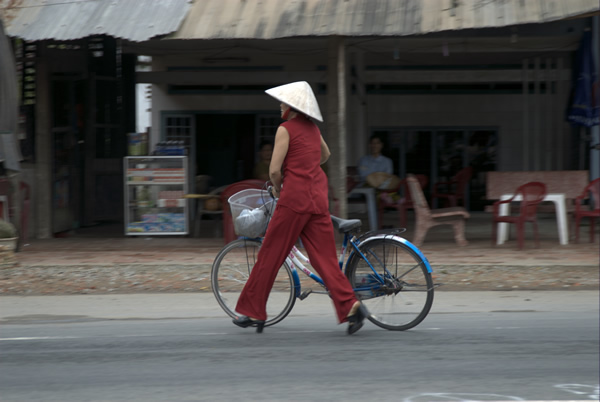
Most of all relax and enjoy the sights and sounds of Vietnam and make sure to bring along your sense of adventure and appreciation for the culture. With international travel, there is often the unexpected. With a flexible plan and a positive perspective you will be in great shape for a wonderful experience.